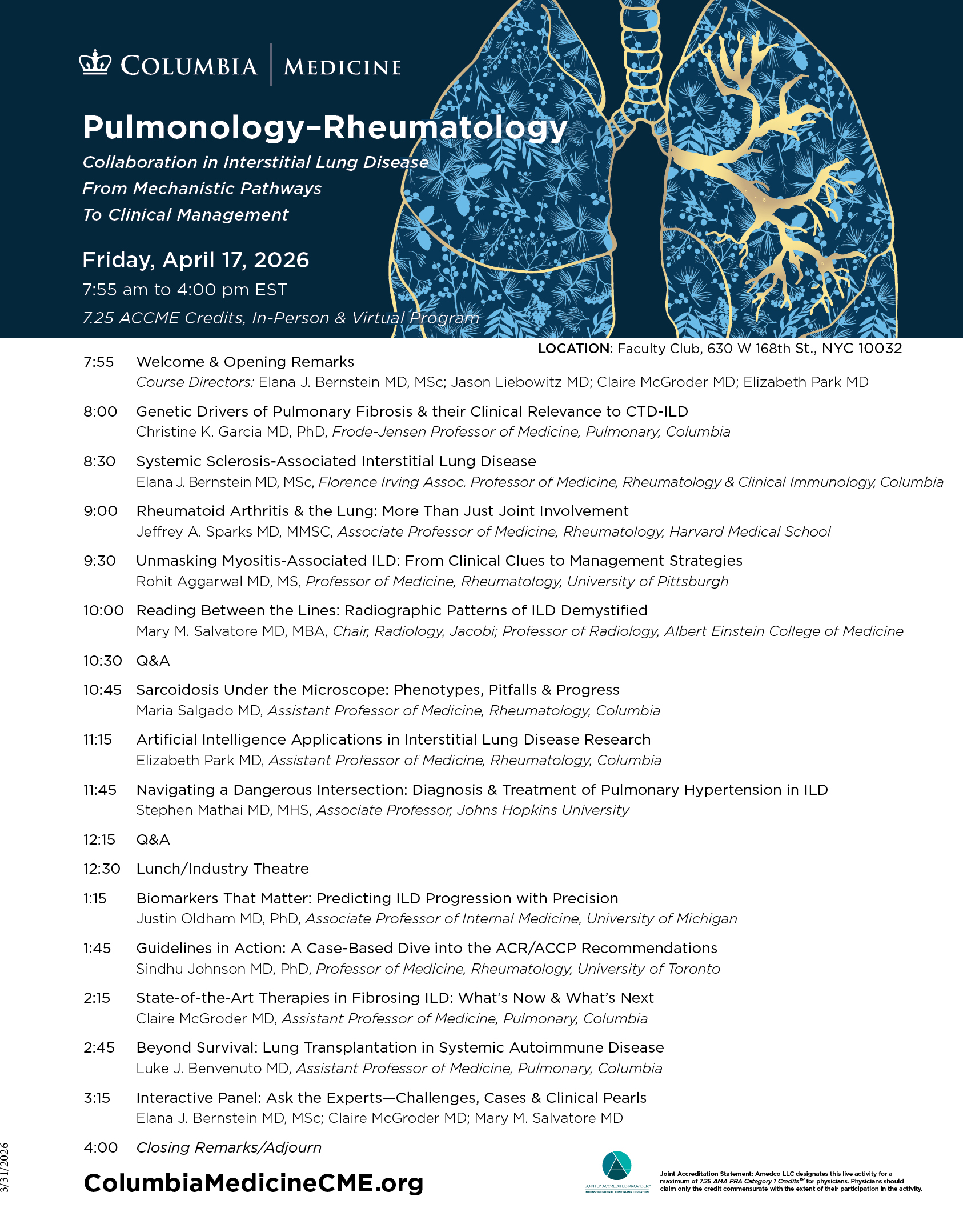
Pulmonology–Rheumatology 2026
Collaboration in Interstitial Lung Disease From Mechanistic Pathways To Clinical Management
IN-PERSON & VIRTUAL CONFERENCE
NOTE: In-person registration includes light breakfast and lunch
Learning Objectives
- Differentiate key clinical and pathologic
phenotypes of sarcoidosis and recognize common diagnostic pitfalls to improve
diagnostic accuracy.
- Describe the pathophysiology, presentation, and
progression of systemic sclerosis–associated interstitial lung disease
(SSc-ILD) & apply current evidence-based management approaches.
- Identify pulmonary manifestations of rheumatoid
arthritis and integrate multidisciplinary strategies for evaluation and
treatment.
- Recognize clinical clues and diagnostic pathways
for myositis-associated ILD, and implement contemporary management strategies
for affected patients.
- Interpret radiographic patterns of interstitial
lung disease (ILD) and correlate them with underlying clinical and pathologic
features.
- Explain the role of genetic variants in
connective tissue disease–associated ILD (CTD-ILD) and utilize this knowledge
to guide risk assessment and personalized care.
- Evaluate emerging applications of artificial
intelligence in ILD diagnosis, classification, and prognosis and discuss their
potential clinical utility.
- Identify early indicators of pulmonary
hypertension in ILD and apply guideline-based therapeutic strategies for timely
intervention.
- Apply the latest ACR guidelines and
recommendations for ILD through case-based clinical reasoning.
- Assess the utility of established and emerging
biomarkers for predicting pulmonary fibrosis progression and tailoring
treatment plans.
- Compare current and emerging therapies for
fibrosing ILDs, including antifibrotic agents and novel investigational
treatments.
- Discuss indications, outcomes, and special considerations for lung transplantation in patients with systemic autoimmune diseases.
Program Description
This comprehensive, full-day symposium brings
together leading experts in pulmonology, rheumatology, radiology, and
translational science to advance the understanding and management of
interstitial lung diseases (ILDs) associated with systemic autoimmune
conditions. Through state-of-the-art lectures, case-based discussions, and
emerging research highlights, participants will explore the latest advances in
disease mechanisms, diagnostic strategies, imaging interpretation, biomarker
development, and therapeutic innovation. Special emphasis will be placed on
connective tissue disease–associated ILD, including sarcoidosis, systemic
sclerosis, rheumatoid arthritis, myositis, and fibrosing phenotypes, as well as
ILD-related pulmonary hypertension and considerations for lung transplantation.
The program is designed to promote multidisciplinary collaboration and equip
clinicians with practical, evidence-based tools to enhance patient care.
Target Audience Statement
This program is designed for pulmonologists,
rheumatologists, radiologists, transplant specialists, primary care physicians,
nurse practitioners, physician assistants, fellows, residents, nurses, and
other healthcare professionals involved in the diagnosis, management, or
research of interstitial lung diseases and systemic autoimmune conditions. The
symposium will also benefit clinicians seeking to enhance their understanding
of complex ILD presentations, apply current guideline-based practices, and integrate
emerging diagnostic technologies and therapies into clinical care.
Video Access
Following the program, all registrants will have access to lecture video recordings for ONE month.
Joint Accreditation Statement
In support of improving patient care, this activity has been planned and implemented by Amedco LLC and Columbia University. Amedco LLC is jointly accredited by the Accreditation Council for Continuing Medical Education (ACCME), the Accreditation Council for Pharmacy Education (ACPE), and the American Nurses Credentialing Center (ANCC), to provide continuing education for the healthcare team.
Professions in scope for this activity are listed below. Amedco Joint Accreditation #4008163.
Physicians
Amedco LLC designates this live virtual activity for a maximum of TBD AMA PRA Category 1 Credits™ for physicians. Physicians should claim only the credit commensurate with the extent of their participation in the activity.
Nurse Practitioners
The American Association of Nurse Practitioners (AANP) recognizes the Accreditation Council for Continuing Medical Education (ACCME) and the American Nurses Credentialing Center (ANCC) as approved accreditors and allow reciprocity for AANPCP continuing education credit.
Physician Assistants
The National Commission on Certification of Physician Assistant (NCCPA) states that AMA PRA Category 1 Credit™ are acceptable for continuing medical education requirements for recertification for PAs. Amedco LLC designates this live activity for a maximum of TBD AMA PRA Category 1 Credit™. PAs should claim only the credit commensurate with the extent of their participation in the activity.