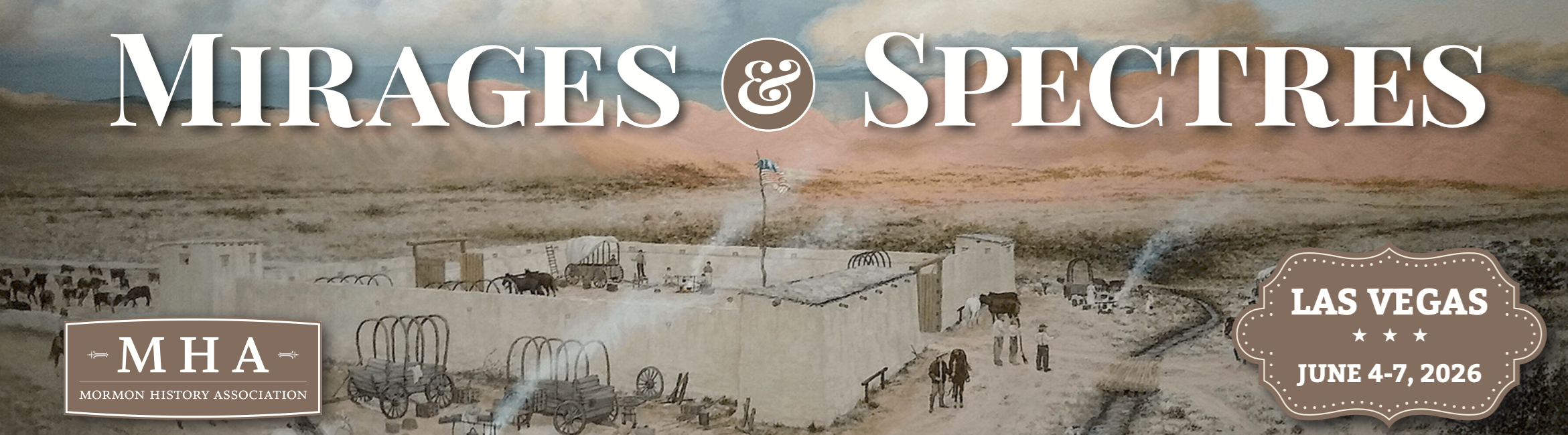
The Mormon History Association invites you to Las Vegas, Nevada, for its sixty-first annual conference to be held June 4-7, 2026. Situated in the Mojave Desert, Las Vegas is both a bustling resort city, entertaining millions of people from all over the world annually, and a home to over half a million people, most of whom live away from the lights and sounds of the Strip. The area has long been a location of residence and respite, including for the Southern Paiutes (Nuwuvi) and, more recently, European explorers. In 1829, while traveling from Nuevo México to Alta California, a group of merchants paused for water from bubbling springs near a meadow of grasses and trees. They referred to the fertile area as “las vegas.”
A few decades later, a group of Latter-day Saints answered Brigham Young’s call to colonize Las Vegas. The missionaries hoped to preach to local American Indian tribes, mine for ore, and establish a fort. Their hopeful expectations proved to be a mirage, as the fort was abandoned in less than two years. But remnants of the fort endured, a reminder of what had been and a harbinger of what was to come. Latter-day Saints continued to settle in the area in succeeding decades and, beginning in the mid-twentieth century, developed a permanent and influential presence. During the same decades in which mobsters funded the emergence of a thriving casino industry, the Saints established the first Las Vegas stakes. “Sin City,” it turns out, was a capacious space where things aren’t always what they seem.
Permanence and transience have long intermingled in this region. While Las Vegas is a place to live for many, including about one-hundred thousand Latter-day Saints, many more people associate it with fleeting stopovers to engage in various forms of entertainment, including attractions for different audiences. There is something both ephemeral and spectral about the Strip. The region’s present and past encourages reflections on the mirages and spectres of history. Mormon history is also full of expectations, perceptions, and remainders that haunt in myriad ways. We invite proposals that examine the rich varieties of the Mormon historical experience, resurrecting its surprising and overlooked presences (human and otherwise), uncovering its untold stories and unexpected developments, and attending to its lingering influences (both apparent and opaque).
Agenda
Special Presentations
Tim is a psychotherapist and improvising/creative musician performing on the guitar with electronics in both solo and collaborative situations.
Mason Kamana Allred is Associate Professor of Communication, Media, and Culture at BYU–Hawaii.
Barrett Burgin & Jessica Burgin
Barrett and Jessica Burgin are filmmakers, and together own Burgindie Pictures.
Clara Varjão Schettini is a historian and PhD student in Religious Studies at the Catholic University of Pernambuco, Brazil.
Susan Lee Johnson holds the inaugural Harry Reid Endowed Chair for the History of the Intermountain West.
Director, Institute of American Indian Studies/Associate Professor Department of History and author of Mormon Settler Colonialism Inventing the Lamanite.
Kathryn Gin Lum is Professor and Chair of Religious Studies in collaboration with the Center for Comparative Studies in Race and Ethnicity and History (by courtesy) at Stanford University
Jessica Nelson is an associate historian at the Church History Department. She has worked on the Joseph Smith Papers project and has been involved in several women's history projects, including Rise Up and Speak: Selected Discourses of Eliza R. Snow.
Associate professor of history at Sam Houston State University and author of American Nationalisms: Imagining Union in the Age of Revolutions, 1783-1833 and Kingdom of Nauvoo: The Rise and Fall of a Religious Empire on the American Frontier.
An award-winning songwriter, most recently receiving the LDSPMA Spark Award in 2024 for her song "Kitetail". She loves painting badly and running slowly, but most of all, she loves her husband and their three amazing kids.
MAHONRI STEWART is a national award-winning playwright, director, theatre artist, educator, and emerging screenwriter who interweaves his loves of history, literature, the performing arts, faith, mysticism, and dramatic writing into his work.
Richard E. Turley Jr. & Barbara Jones Brown
Turley and Brown’s co-authored book, Vengeance is Mine: The Mountain Meadows Massacre and Its Aftermath.
Ryan Combs & Sharla Brooks Moody
Ryan Combs is the Museum Director and Archivist for the Juanita Brooks Historical Preservation Society. Sharla Moody is director of Short Creek Heritage Project and the Juanita Brooks Museum
Lisa Messenger & Larry Moulton
Lisa local Las Vegas historian, has written two books and recently completed a term as Vice President of the Friends of the Fort. President of the “Friends of the Fort," Old Las Vegas Historic Mormon Fort State Park.
No records found.
Exhibitors
The Church History Library in Salt Lake City, Utah, is the primary archive of The Church of Jesus Christ of Latter-day Saints. It is a state-of-the-art facility designed to collect and preserve materials about the Church, its history, and its members.
The Church Historian’s Press was announced in 2008 by the Church History Department of The Church of Jesus Christ of Latter-day Saints. The press publishes works of Latter-day Saint history that meet high standards of scholarship.
BYU Charles Redd Center for Western Studies
The BYU Redd Center provides funding support for research, publishing, teaching, and public programming, hosting public events, assisting the production of scholarly work that connects academic and public audiences, and more.
The BYU Religious Studies Center is your lifelong resource for gospel scholarship. Our mission is to encourage, sponsor, and publish serious, faithful, gospel-related materials. Access our free gospel study resources at rsc.byu.edu.
The Journal of Mormon History is an official publication of the Mormon History Association (MHA). Its purpose is to publish scholarly work covering the full scope of Mormon history, which represents domestic and international perspectives
The University of Illinois Press publishes 80 new books and 43 journal titles annually. We publish many books which examine religion broadly and Mormonism specifically from historical, sociological, anthropological, and cultural perspectives.
Signature Books was founded in 1981 to promote the study of Mormonism at its intersection with American history.
For over two decades, Greg Kofford Books has been a leading publisher in Mormon Studies with award-winning books focusing on Mormon history, theology, scripture, and culture.
We are a community of people around the world interested in the academic study of Mormonism(s).
A nonprofit agency of the University of Utah, the Press publishes scholarly works of significance to Utah, the region, and the world.
John Whitmer Historical Association
John Whitmer Historical Association (JWHA) is a non-profit organization dedicated to advancing the study of Latter Day Saint history.
Dialogue: A Journal of Mormon Thought
Dialogue: A Journal of Mormon Thought is an independent quarterly edited by Latter-day Saints who wish to bring their faith into dialogue with the larger stream of world religious thought
Juanita Brooks Historical Preservation Society
A nonprofit dedicated to Preserving the legacy of Juanita Brooks
Instantly transcribe, search and host your family or organization's records online, whether they be handwritten, typed, photographed, or audio/video.
The Church of Jesus Christ was founded by Jesus Christ and restored back to the earth. We are a place to build a strong, unshakeable, faith-based life. A place to be filled with His spirit, fed by His word, and lifted by the people of God.
The Journal of Mormon Polygamy promotes rigorous, respectful scholarship by bridging academic and independent researchers to explore polygamy through evidence-based, inclusive, and evolving historical analysis.
No records found.











Program
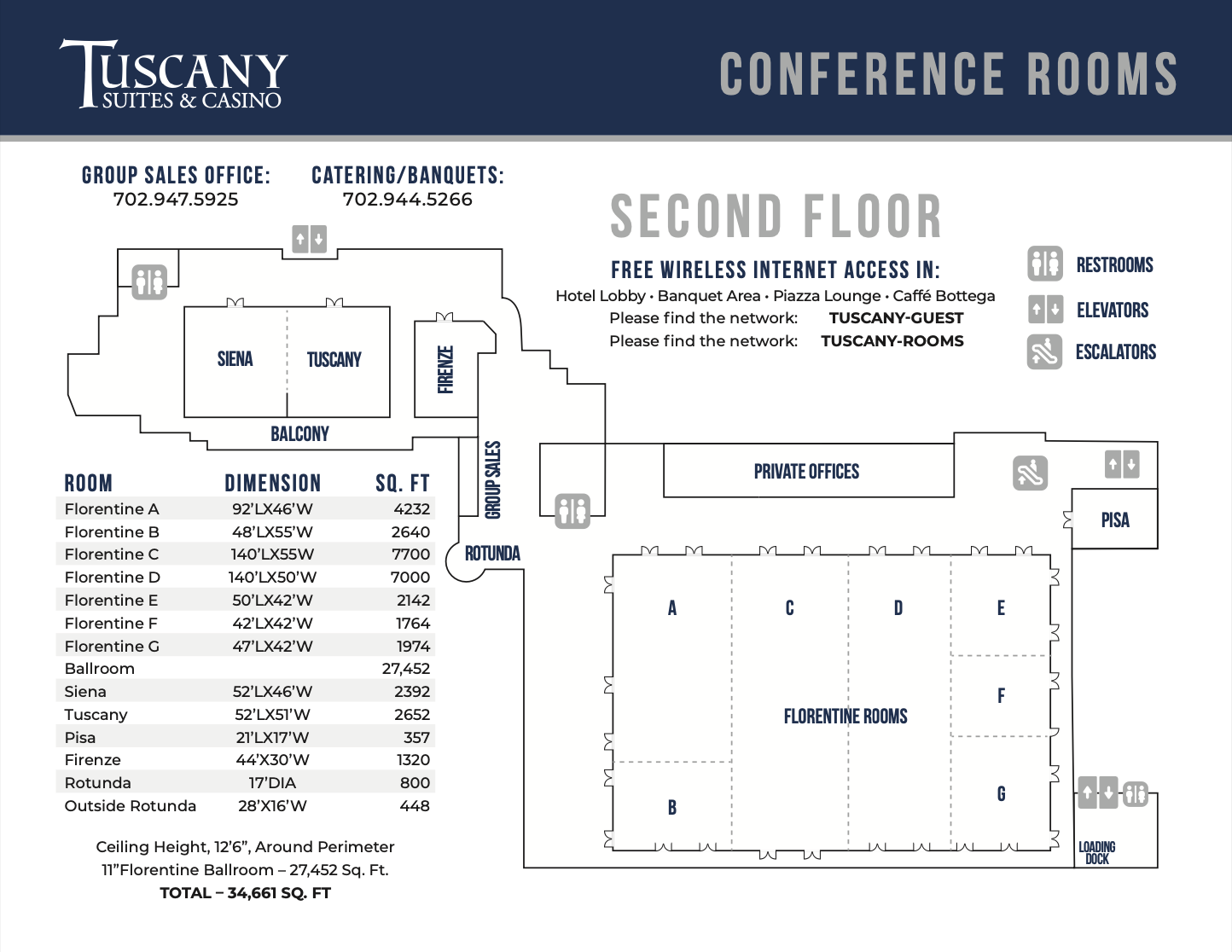
Event Map
Conference activities will take place on the second floor of the Tuscany Suites & Casino.
Florentine A — Exhibitor Hall
Book displays, vendors, and organizational tablesFlorentine C & D — Plenary and General Sessions
Keynotes, major panels, and large gatheringsRotunda — Registration
Badge pick-up, check-in, and attendee assistance
Additional breakout sessions will be held in nearby conference rooms. Please refer to the event map for room locations and traffic flow.
Travel & Transportation
Travel & Transportation
The conference will be held at Tuscany Suites & Casino, conveniently located just 2 miles (about 7 minutes) from Harry Reid International Airport.
Getting to the hotel is quick and easy:
From the airport
Taxi: ~5–10 minutes, typically $15–20
Uber/Lyft: ~5–10 minutes
Rental cars available onsite
Most shuttles and rideshares pick up directly outside baggage claim
No car required
The hotel is walkable to the Strip and restaurants
Most conference events, sessions, and tours depart directly from the hotel
Parking
Free self-parking at the Tuscany for guests and attendees
We recommend flying into Harry Reid International (LAS) for the most convenient access.
Exhibitor Information
Tuscany Suites & Casino | Mormon History Association Annual Conference
Exhibits & Advertising Overview
Exhibits and advertising opportunities are available during the conference at Tuscany Suites & Casino, with exhibit tables located adjacent to the main ballroom to ensure consistent visibility and high attendee traffic throughout the event.
We warmly welcome museums, archives, libraries, university presses, nonprofit organizations, and community groups to share their work with conference participants.
Exhibit Schedule
Set-up: Thursday, 12:00–4:00 pm
Thursday: 4:00–6:00 pm (during open registration)
Friday: 7:00 am–6:30 pm
Saturday: 7:00 am–6:00 pm
Tear-down: Saturday by 6:00 pm (before the Presidential Banquet)
The busiest exhibit periods are typically before sessions, between programming blocks, and during Saturday lunch when no events are scheduled.
What’s Included with Each Exhibit Registration
6-foot exhibit table(s)
Tablecloth and chairs
Two complimentary basic conference registrations
Option to purchase additional registrations
Meals available à la carte
Rooms are locked nightly for security.
Shipping & Logistics
Exhibitors may ship materials directly to the hotel. Packages should arrive no earlier than three days before the conference and must be clearly labeled with the on-site contact name and “Mormon History Association (MHA).”
Handling fees apply based on shipment weight, and exhibitors are responsible for return shipping arrangements. The hotel does not provide packing materials.
Advertising Opportunities
Print and on-site advertising options are also available for organizations wishing to reach attendees without hosting a full exhibit table. Details and pricing are available upon request.
👉 For exhibitor or advertising information, please contact: christine@mormonhistoryassociation.org
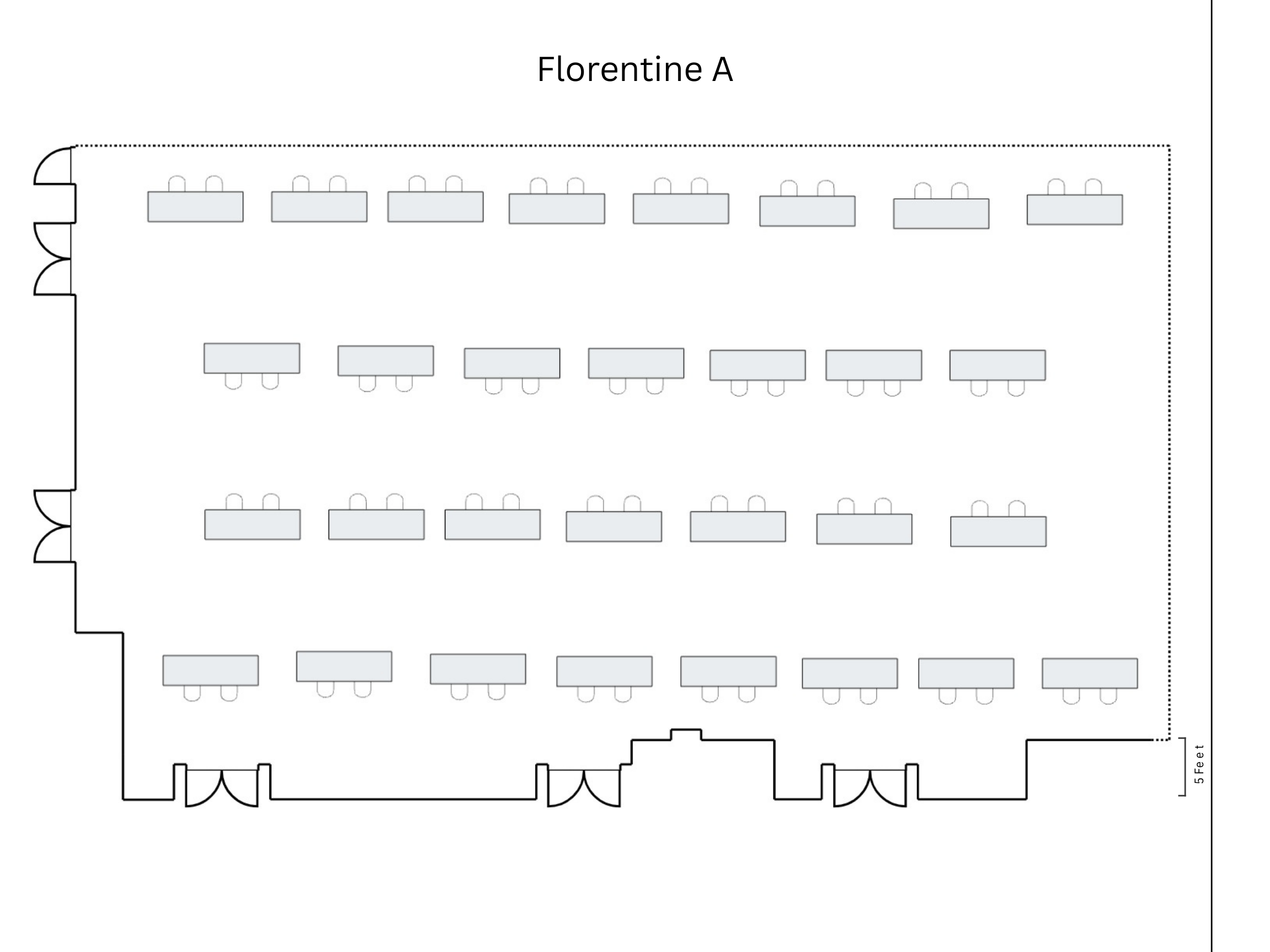
Exhibit Hall